


Stable, validated, and uninterrupted processes
In the pharmaceutical and medical device sector, stability, precision, and traceability are essential drivers for success. Even the smallest power disturbances can affect sensitive processes or jeopardize entire production batches.
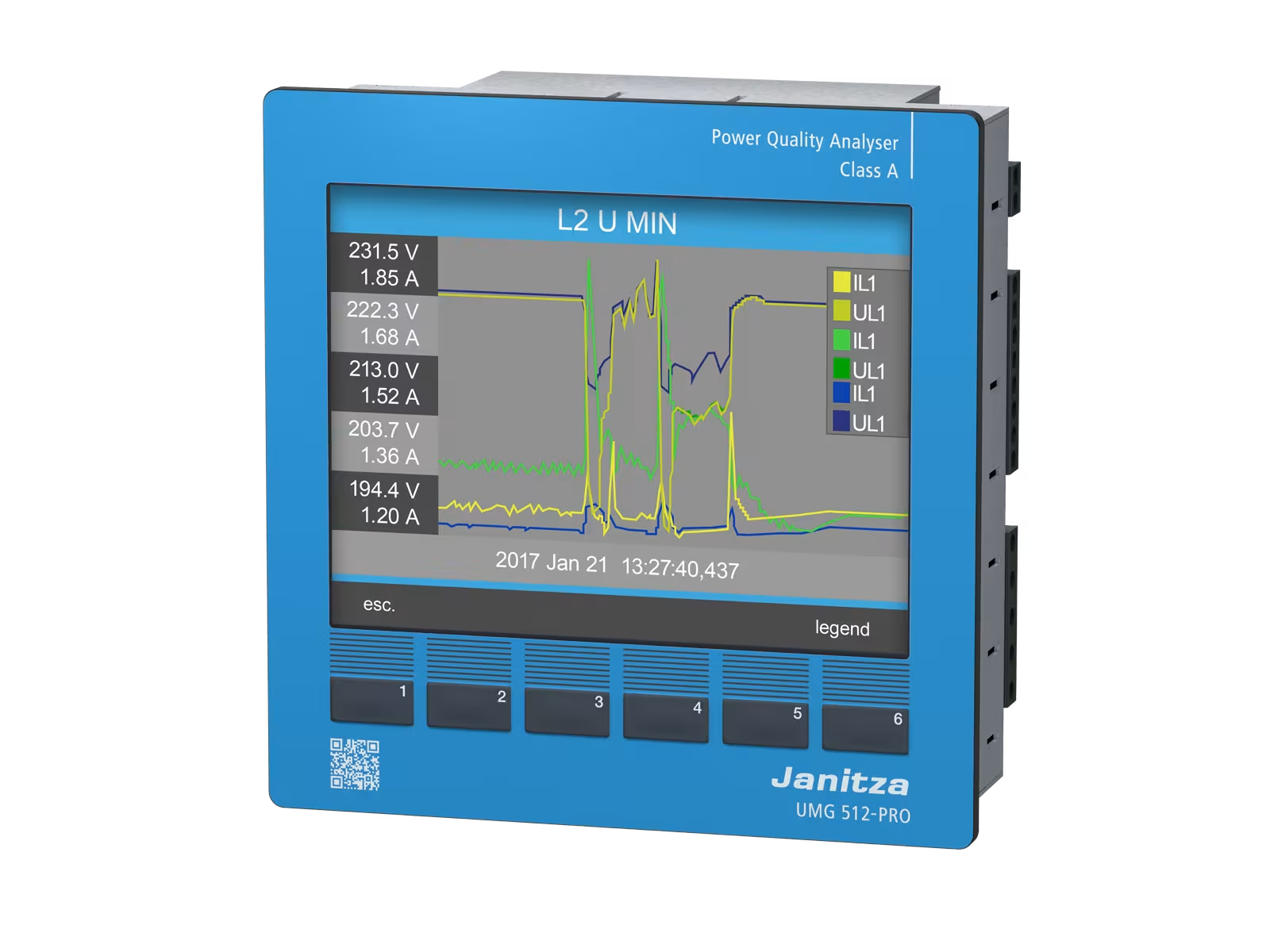
Janitza measuring devices continuously monitor power quality, detect disturbances at an early stage, and ensure a stable power supply — from laboratories and cleanrooms to full-stack production facilities. They also enable seamless documentation of power events, support compliance with standards such as ISO 50001, and provide transparency for audits and validation processes.
The result: increased safety, efficiency, and quality in energy-dependent processes — enabling reliable and sustainable production across the life sciences industry.
Challenges
The pharmaceutical production environment places the highest demands on power quality, process reliability, and traceability. Every deviation can impact product quality, validation, and supply security.
for continuous production and laboratory processes
to prevent voltage dips and disturbances
of energy and process data for audits and GMP compliance
such as GMP, FDA, and ISO 50001
for ventilation, cooling, and cleanroom systems
through transparent monitoring and CO2 reporting
Global energy monitoring in the pharmaceutical industry
An international pharmaceutical company was looking for a scalable solution to make energy consumption and power quality transparent across all production sites.
Current situation
The goal was to implement targeted energy efficiency measures, reduce CO2 emissions, and meet regulatory requirements in accordance with ISO 50001.
Solution
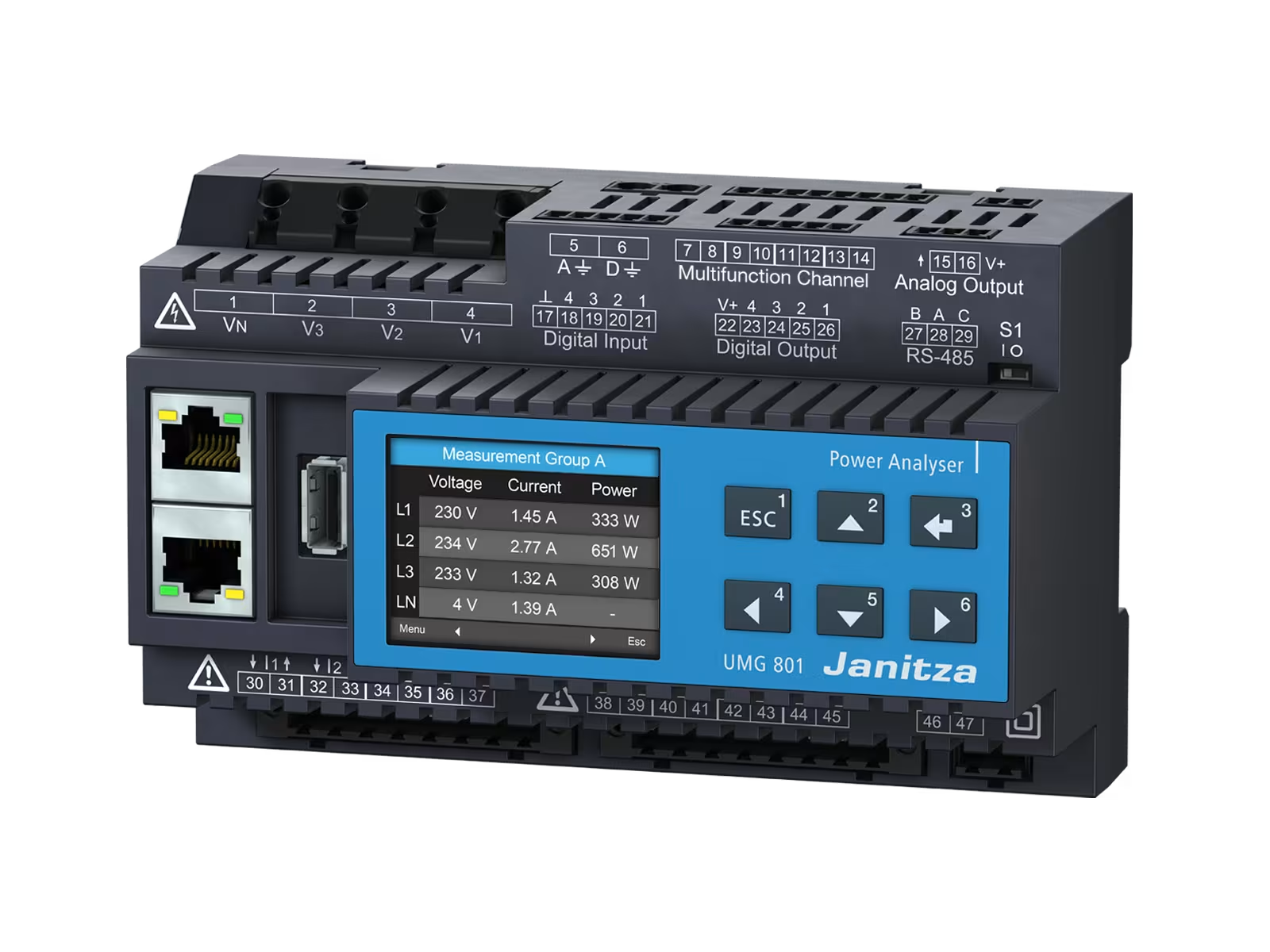
By introducing Janitza measuring devices such as the UMG 801 and the GridVis® software, a comprehensive energy monitoring structure was established. The devices communicate via OPC UA interfaces directly with the central data system, allowing measurement points worldwide to be easily integrated and monitored.
As a result, all consumption and quality data from the sites are now available in real time. The company benefits from greater supply reliability, standardized documentation of energy events, and a solid data foundation for efficiency and sustainability initiatives.
Result
Reducing energy consumption as a success factor in the pharmaceutical industry
Strict climate and environmental requirements:
Cleanrooms, constant temperature, and humidity control require 24/7 operation of ventilation, cooling, and filtration systems. These systems alone can account for up to 70% of a facility’s total energy consumption.
Continuous operation:
Production and laboratory processes run around the clock, often with high electrical loads from pumps, mixers, sterilization units, or bioreactors.
Validation and safety requirements:
Systems can rarely be shut down, as every restart requires renewed validation or risk assessment — making uninterrupted operation essential.
Risks and Costs of Unplanned Production Downtime
- Stillstandskosten je nach Produktionslinie zwischen 50.000 und über 500.000 € pro Stunde
- Materialverlusten im sechs- bis siebenstelligen Bereich, wenn begonnene Chargen durch Änderungen in Temperatur, Druck oder Reinraumbedingungen nicht mehr verwendbar sind
- Neuvalidierung oder -qualifizierung von Anlagen und Prozessen nach einem ungeplanten Stopp
- Höheres Risiko für Lieferverzögerungen und Vertragsstrafen
Reliable Power Supply
with Janitza Measurement Technology


Power quality monitoring
for high-availability systems


Batch process monitoring
Seamless monitoring, documentation, and auditable provision of energy- and quality-related parameters during a pharmaceutical batch


Scalable measurement technology
for individual production lines or entire facilities


Standard-compliant data processing and archiving


Comparison of energy consumption
across different production sites


Full transparency of energy usage
to identify irregular loads and take corrective action




FURTHER INFORMATION






Brief information Pharmaceutical Industry
The short brochure for the pharmaceutical and medical device industry gives you an insight into the topic.
Get personal advice now
Your request is important to us and we guarantee fast and professional processing.


